 l'administration


Weighted Blankets: What They Do, How They Work & Uses
A weighted blanket is a heavy therapeutic bedding accessory engineered with distributed internal weight to reduce physiological arousal, lower stress, and enhance sleep efficiency across various demographics. These specialized blankets apply gentle, consistent pressure to the body, shifting the autonomic nervous system from an active “fight-or-flight” state to a calm, restorative parasympathetic state. While mass retailers often present them as a simple cure-all for chronic sleep issues, getting the most therapeutic benefit requires understanding how tactile stimulation interacts with your unique biology. This expert guide breaks down the physical mechanisms behind deep pressure stimulation, highlights critical usage pitfalls that occupational therapists warn against, and outlines how to choose the right configuration for your specific sleeping profile.
What Are Weighted Blankets?
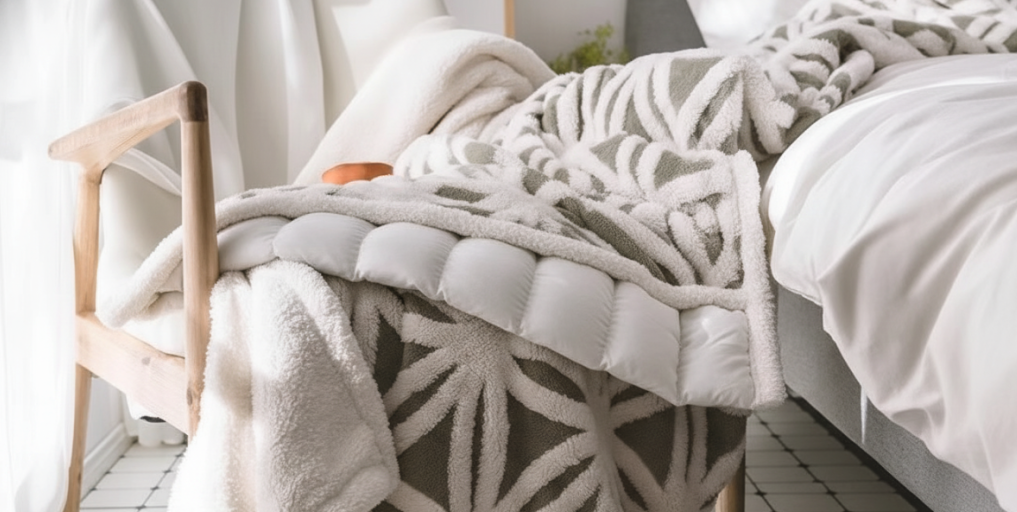
Weighted blankets are specialized bedding tools designed to weigh between 5 and 30 pounds, utilizing specific dense fillings to create evenly distributed downward pressure on the body. Unlike traditional heavy comforters that rely on bulky layers of fiberfill, these blankets use compact, non-insulating materials to generate weight without causing excessive heat retention. They originated as sensory integration tools in clinical settings and have since transitioned into mainstream wellness routines as non-pharmacological sleep aids.
The Evolution of Filler Materials: Beads, Pellets, and Open Knits
The interior material of a weighted blanket directly dictates its overall pressure distribution, auditory feedback, and breathability. Older manufacturing standards relied on plastic poly-pellets, which are bulky, noisy when shifting, and prone to creating uneven weight pockets during movement. Modern premium alternatives utilize micro-glass beads, which are extremely fine, settle silently, and conform closely to the natural contours of your skeleton.
Recent material science has introduced filler-free open-knit weighted blankets as a major evolutionary step in sleep design. These models achieve their weight entirely through heavily layered loops of organic cotton, bamboo, or Tencel yarn woven together. This open structure eliminates the risk of shifting internal beads while providing optimal airflow, addressing the heat retention problems common to traditional quilted designs.
What Do Weighted Blankets Do?
Weighted blankets apply firm, uniform physical contact to decrease nervous system hyperarousal, reduce physical restlessness, and improve overall sleep parameters[1][5]. This mechanical pressure mimics the calming sensory inputs of clinical touch therapies, helping the body stabilize its daily stress responses.
Quantitative Effect Matrix of Physiological Indicators Before and After Gravity Blanket Use
| Physiological markers | Common units of measurement | Use the before/baseline. | Post-use status (After) | Typical Quantitative Change | Statistical significance level (Typical p-value)* | A Brief Analysis of the Physiological Mechanism |
| Resting heart rate (HR) | BPM (beats per minute) | 72 – 85 bpm (mild anxiety or resting state before sleep) | 64 – 76 bpm | A decrease of approximately 8% – 10% | p < 0.05 | The weight of the weighted blanket provides even, deep pressure, activating the parasympathetic nervous system (PNS) and reducing overexcitation of the sympathetic nervous system (SNS). |
| Salivary Cortisol Levels | Nanomol/L (measured at night/before bedtime as an example) | 6.0 – 9.0 nmol/L <br> (Higher under pressure) | 4.2 – 6.3 nmol/L | A decrease of approximately 20% – 30% | p < 0.05 | Deep stress stimulation reduces the activity of the hypothalamus-pituitary-adrenal axis (HPA axis), thereby inhibiting the release of stress hormones (cortisol). |
| Sleep Onset Latency (SOL) | minutes | 35 – 60 minutes <br> (Mild to moderate difficulty falling asleep) | 15 – 25 minutes | Shortened by approximately 30% – 50% | p < 0.01 | With increased parasympathetic nerve activity, the body releases more serotonin, which is converted into melatonin, allowing the body to enter a sleep-ready state more quickly. |
| Heart Rate Variability (HRV – measured in RMSSD or SDNN) | Milliseconds (ms) | 30 – 45 ms (This indicates that the autonomic nervous system is in a state of relative tension) | 40 – 55 ms | An increase of approximately 15% – 25% | p < 0.05 | An increase in HRV directly reflects the enhanced tension of the vagus nerve, indicating that the body’s self-regulation and stress-relieving abilities have been improved. |
Calming the Autonomic Nervous System
Weighted blankets suppress overactive stress responses by physically dampening your sympathetic nervous system activity. The continuous physical grounding slows your breathing rate and stabilizes your resting heart rate, signalling safety to the amygdala—the brain’s emotional processing center[7]. For individuals experiencing acute daytime anxiety or sensory overload, wrapping up in a weighted blanket provides immediate tactile feedback that reduces the perception of stress[5][8].
Restricting Nighttime Movement and Tossing
Applying downward physical force limits involuntary tossing and turning throughout the night. This gentle physical barrier prevents sudden arm or leg movements from waking you up during lighter sleep stages. Minimizing these micro-awakenings allows your body to progress uninterrupted through essential deep and REM sleep cycles, leading to a more restorative night[2].
Enhancing Objective Sleep Efficiency
Continuous tactile stimulation increases sleep efficiency, which is the percentage of your time in bed spent in actual restorative sleep[2]. People experiencing sleep onset issues find that the deep physical weight helps quieten mental chatter, shortening the time it takes to fall asleep[8]. The continuous physical grounding acts as a constant sensory reference point, keeping a restless mind anchored to the physical bed.
How Do Weighted Blankets Work?
Weighted blankets function through a clinically validated neurological mechanism known as Deep Touch Pressure (DTP)[2][3]. This process relies on physical compression to trigger hormonal changes that naturally prepare your brain and body for deep sleep cycles[3][6].
[ShiPing ChaRu] (Placeholder: Explainer Video – Explaining the neurological pathway of Deep Touch Pressure from Pacinian corpuscles to the vagus nerve)
The Science of Deep Touch Pressure (DTP)
Deep Touch Pressure works by stimulating specialized pressure receptors in your skin, known as Pacinian corpuscles, which send inhibitory signals directly to your central nervous system. This mechanical stimulation acts similarly to a firm massage, triggering the release of neurotransmitters that reduce somatic tension. Occupational therapists have used this sensory feedback loop for decades to assist patients who struggle with self-regulation or sensory processing difficulties[1][4].
Restoring the Serotonin-Melatonin Pipeline
The physical compression of DTP triggers a biological cascade that elevates your brain’s serotonin and melatonin levels while lowering cortisol[6]. Cortisol, the primary stress hormone, keeps your mind in a state of high vigilance that blocks sleep initiation[8]. Once the downward physical weight lowers cortisol, your brain can freely synthesize serotonin, which is then converted by the pineal gland into melatonin—the hormone responsible for regulating your daily sleep-wake cycle[6].
What Is a Weighted Blanket Used For?
Weighted blankets are versatile therapeutic tools used to manage sensory disorders, mental health challenges, and various chronic sleep issues[4][5]. Their physical stabilizing properties make them highly effective, non-invasive additions to standard medical and psychological care routines[2].
Managing Generalized Anxiety and ADHD
Mental health professionals recommend weighted blankets to help alleviate generalized anxiety and stabilize focus in patients with ADHD. Individuals with attention-deficit disorders often struggle to filter out ambient sensory noise, resulting in cognitive fatigue and emotional overwhelm. The consistent, grounding weight of the blanket acts as an environmental filter, reducing sensory distractions and helping the user feel secure in their immediate surroundings.
Soothing Sensory Processing Disorders (SPD)
Occupational therapists use smaller weighted throws to help children and adults with sensory processing disorders regulate their sensory systems. The constant tactile feedback helps organize neurological inputs, preventing sudden meltdowns caused by sensory overload. This targeted compression provides a highly predictable physical stimulus that helps stabilize a hypersensitive nervous system.
Mitigating Chronic Insomnia and Sleep Fragmentation
Sleep specialists suggest using weighted blankets to shorten sleep latency and reduce nighttime awakenings for patients with chronic insomnia. By physically soothing restless muscles and slowing racing thoughts, the blanket helps ease the body into early sleep stages without resistance. Long-term clinical studies show that consistent use over four weeks significantly reduces daytime fatigue and increases daytime alertness.
Critical Pitfalls: What Competitors Don’t Tell You
Using a weighted blanket incorrectly can lead to physical discomfort, joint strain, and a gradual decline in the blanket’s therapeutic effectiveness. Knowing these expert-level pitfalls will help you avoid common mistakes and get the most out of your blanket.
The Sensory Habituation Trap: Why 24/7 Use Can Stop It Working
Your nervous system naturally adapts to constant physical stimuli, meaning that sleeping under a weighted blanket every single hour of every day will eventually diminish its therapeutic benefits. Sensory accommodation occurs when the brain’s tactile receptors stop sending calming signals because they have adjusted to the continuous downward pressure. If your body adapts completely to the weight, the anxiety-reducing and sleep-promoting effects will fade over time.
Sleep specialists recommend using an “Intermittent Dose Protocol” to maintain high neurological sensitivity. This involves using the weighted blanket only during the initial 20 to 30 minutes of sleep induction, or alternating weeks of use (one week on, one week off). Temporarily removing the heavy physical stimulus resets your tactile receptors, keeping the deep pressure stimulation highly effective whenever you reintroduce it.
The Thermal-Pressure Dilemma for Hot Sleepers
Standard heavy blankets create a thermal barrier that traps body heat, which can easily trigger nighttime awakenings and offset the sleep benefits of the weight. When your core body temperature rises during the night, your brain initiates micro-arousals to encourage cooling, which fragments your sleep architecture. Many hot sleepers find themselves abandoning traditional weighted blankets because the heat retention makes them sweat and feel uncomfortable.
Opting for an open-loop knit design made from Tencel, bamboo, or organic cotton is the best way to resolve this temperature issue. These materials absorb moisture and allow air to circulate freely, keeping you cool while still applying firm, therapeutic pressure to your body. Checking the raw material specifications before you buy ensures you get a blanket that supports your body’s natural temperature regulation.
The 3D Fitting Framework: Selecting Your Configuration
The common rule of choosing a blanket that is exactly 10% of your body weight is outdated and fails to account for sleeping posture, mattress firmness, or joint health. To select a blanket that supports your body safely, you should evaluate three critical dimensions: Distribution, Density, and Duration.
The 3D Fitting Framework Matrix
| Sleeping Posture | Joint Health Status | Primary Support Zone | Optimal Weight Distribution (%) | Pressure Relief Priority |
| Back (Supine) | Healthy (J: 1) | Lumbar / Sacrum | Shoulders: 25% | Lumbar: 45% |
| Back (Supine) | Chronic/Injured (J: 5) | Lumbar / Knees | Shoulders: 20% | Lumbar: 50% |
| Side (Lateral) | Healthy (J: 1) | Shoulders / Hips | Shoulders: 35% | Waist: 15% |
| Side (Lateral) | Chronic/Injured (J: 5) | Pelvic Alignment | Shoulders: 30% | Waist: 25% |
| Stomach (Prone) | Healthy (J: 1) | Midsection | Chest: 40% | Pelvis: 50% |
| Stomach (Prone) | Chronic/Injured (J: 5) | Cervical / Pelvic | Chest: 30% | Pelvis: 60% |
1. Weight Distribution and Sleeping Posture
Your primary sleeping position determines how downward force is distributed across your joints and spine. Side sleepers should choose a lighter weight range, around 7% to 8% of their body weight, because the pressure concentrates on the narrow contact points of the shoulders and hips. Back sleepers can comfortably handle 10% to 12% of their body weight because their skeleton distributes the downward force evenly across a much larger surface area.
2. Material Density and Airflow
The physical footprint of the blanket determines how easily it layers with your existing bedding and how much air it lets through. High-density blankets filled with micro-glass beads are thin and compact, making them excellent for layering during colder months. Low-density, open-knit blankets are thicker and bulkier, but they provide excellent breathability, making them the best option for hot sleepers or warm climates.
3. Usage Duration and Purpose
Your intended usage schedule determines whether you should choose a small throw or a full-sized bed blanket. If you plan to use the blanket mainly for quick stress relief on the couch, choose a smaller throw size that concentrates the weight directly on your lap or chest. For overnight sleeping, choose a blanket that matches your mattress dimensions but does not hang over the edges, as the hanging weight can pull the blanket down and slide off the bed.
Frequently Asked Questions
Who should not use a weighted blanket?
People with chronic respiratory conditions, severe sleep apnea, or physical mobility limitations should avoid using weighted blankets because the extra chest pressure can make breathing more difficult. Infants and toddlers must never use weighted blankets due to the risk of suffocation. If you have severe joint issues like advanced osteoarthritis, the concentrated weight can worsen joint pain rather than soothe it.
Can a weighted blanket be too heavy?
A weighted blanket is too heavy if it makes it difficult for you to turn over, restricts your natural breathing, or causes pain in your joints. If you feel claustrophobic, anxious, or experience chest tightness during use, you should immediately switch to a lighter model. The blanket should always feel like a gentle, comforting hold rather than an overwhelming or restrictive weight.
Are weighted blankets safe for elderly adults?
Weighted blankets are safe for most older adults, provided they have the strength to easily adjust or remove the blanket on their own. Seniors with delicate skin, osteoporosis, or circulation issues should choose lighter options, ideally between 5% and 7% of their body weight. Consulting a doctor or physical therapist before purchasing helps ensure the weight does not put extra stress on fragile bones or joints.
How do you wash a weighted blanket?
How you wash a weighted blanket depends on its design and the type of filler material used inside. Open-loop knitted blankets made from organic cotton can usually be washed directly in a home washing machine on a gentle cycle. Blankets filled with micro-glass beads should be spot-cleaned or hand-washed, unless they have a removable, machine-washable outer cover that you can unzip.
Do weighted blankets help with restless legs?
Weighted blankets can help manage the symptoms of restless legs by providing continuous sensory input that competes with the urge to move. This deep pressure stimulates your sensory nerves, sending calming signals to the brain that help override the uncomfortable crawling sensations in your legs. While it does not cure the underlying cause of restless legs, it can significantly reduce the urge to twitch as you are trying to fall asleep.